Computer vision for aquaculture

Weigh your fish without touching them.

TilapAI reads Average Body Weight (ABW) straight from underwater video through our stereoscopic cameras and proprietary computer vision algorithms.

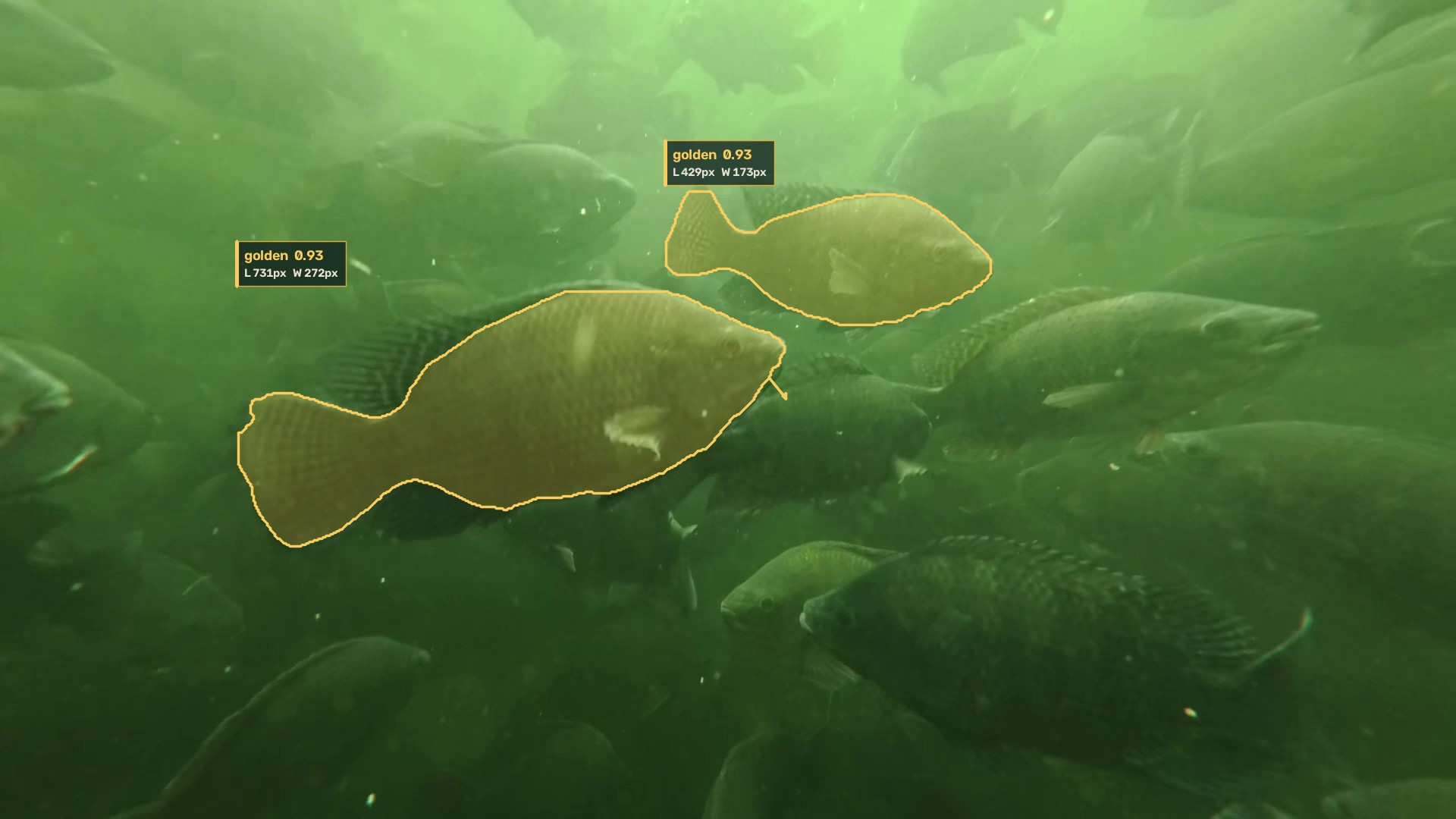
Underwater farm footage with three golden tilapia segmented and measured by the Niloscale model
Real data from a Lake Victoria cage: our algorithms pick the ideal tilapia to measure for an accurate ABW

The status quo

Counting fish by hand is slow, unreliable, and stressful for the fish.

To track growth, farmers need to net thousands of fish out of the water with an average cadence of every two weeks, weigh them, and throw them back after counting. This allows the ABW to be calculated. It stresses the fish, drives up mortality and the chance for disease, and only samples a small fraction of the cage.

0
adult tilapia per cage
average for a single commercial cage
~0
netted every count
hauled out to be weighed by hand
0 days
measurement cycle
on average, then repeated again
  • Handling spikes stress hormones and mortality
  • Hand-netting doesn't scale the way our software does
  • Manual weighing and counting is error-prone
  • Every guess at weight is a guess at feed cost
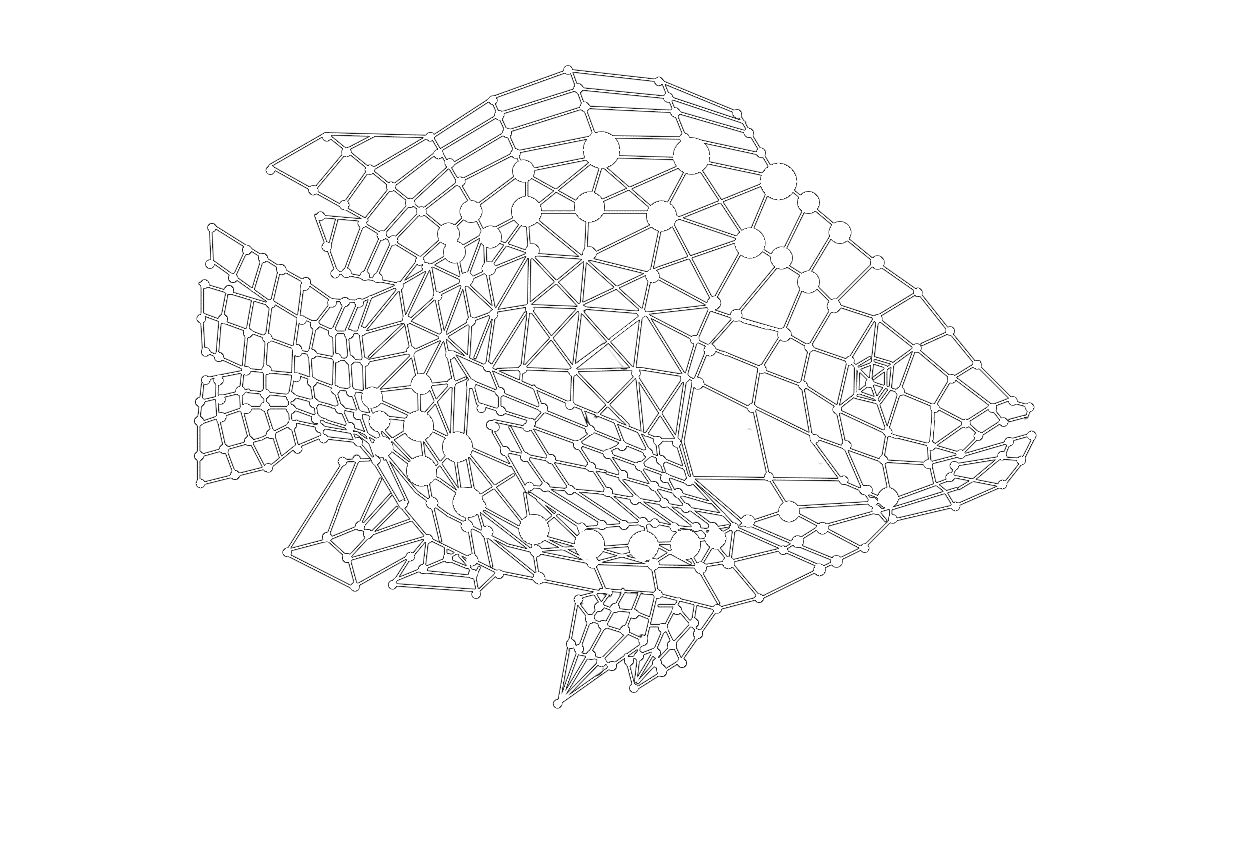
Wireframe mesh reconstruction of a tilapia
Mapping every tilapia into data points.

Introducing Niloscale

A camera, the EU cloud, and a model that measures every fish worth measuring.

One Niloscale system is carried by hand from cage to cage. It records each cage over a roughly two-hour window before being moved to the next, so a single unit can measure up to five cages in a day.

No nets, no stress

Fish are never handled, so the measurement itself no longer drives mortality.

Thousands, not dozens

Across hours of footage, every measurable fish gets counted, so the estimate rests on a real population rather than a quick sample.

Sharper feed decisions

Accurate ABW tightens the food-conversion ratio, the single biggest cost in fish farming.

Only EU companies

Every provider in our stack is a European company by choice, so your data and compute stay in the EU.

How it works

Three stages, from raw footage to accurate cage ABW measurements.

Niloscale is a decoupled, three-stage pipeline where each stage does one job well, so accuracy holds up in murky, moving, real-world water.

  1. 01

    Instance segmentation

    A fine-tuned computer vision model scans every frame and keeps only the tilapia that can be measured accurately for their total surface area. It runs at a deliberately strict confidence threshold.

    precision ≈ 0.95
  2. 02

    Stereoscopic geometry

    A stereoscopic camera measures how far away each identified fish is, and a geometric algorithm uses that distance to reconstruct the fish in 3D and compute its real-world surface area.

  3. 03

    Allometric regression

    An allometric regression model converts surface area into a precise weight, then aggregates across thousands of fish into ABW for the cage.

End to end

From the lake to the dashboard

A resilient, EU technology stack designed for remote farms. Everything in the field is kept simple and robust, so it keeps running in places where the nearest technician can be days away.

Step 1

Capture

A portable stereoscopic camera unit records each cage over a two-hour window before moving on.

Step 2

Relay

Footage syncs at night, when farm bandwidth is free, to EU cloud storage over an encrypted link.

Step 3

Process

Proprietary algorithms run across all the collected footage in the EU cloud, measuring every suitable fish and calculating ABW for the cage.

Step 4

Deliver

A clean dashboard puts current and historical ABW in the farmer's hands, easy to look back on and use to fine-tune feeding.

Portable capture · overnight sync · EU cloud processing · historical ABW dashboard

Where I'm at

From lab bench to a live cage in the field.

Niloscale is moving out of the workshop and into the water. The hardware is built, the first model is trained, and field trials on a commercial farm are next.

  1. H1 2025

    Secured Partners for Water funding to build Niloscale.

  2. H2 2025

    Field prototype built and the first detection model trained.

  3. H1 2026

    First field trials on a commercial farm.

  4. Next

    Extended field trials across farms in Uganda, Kenya and Zambia.

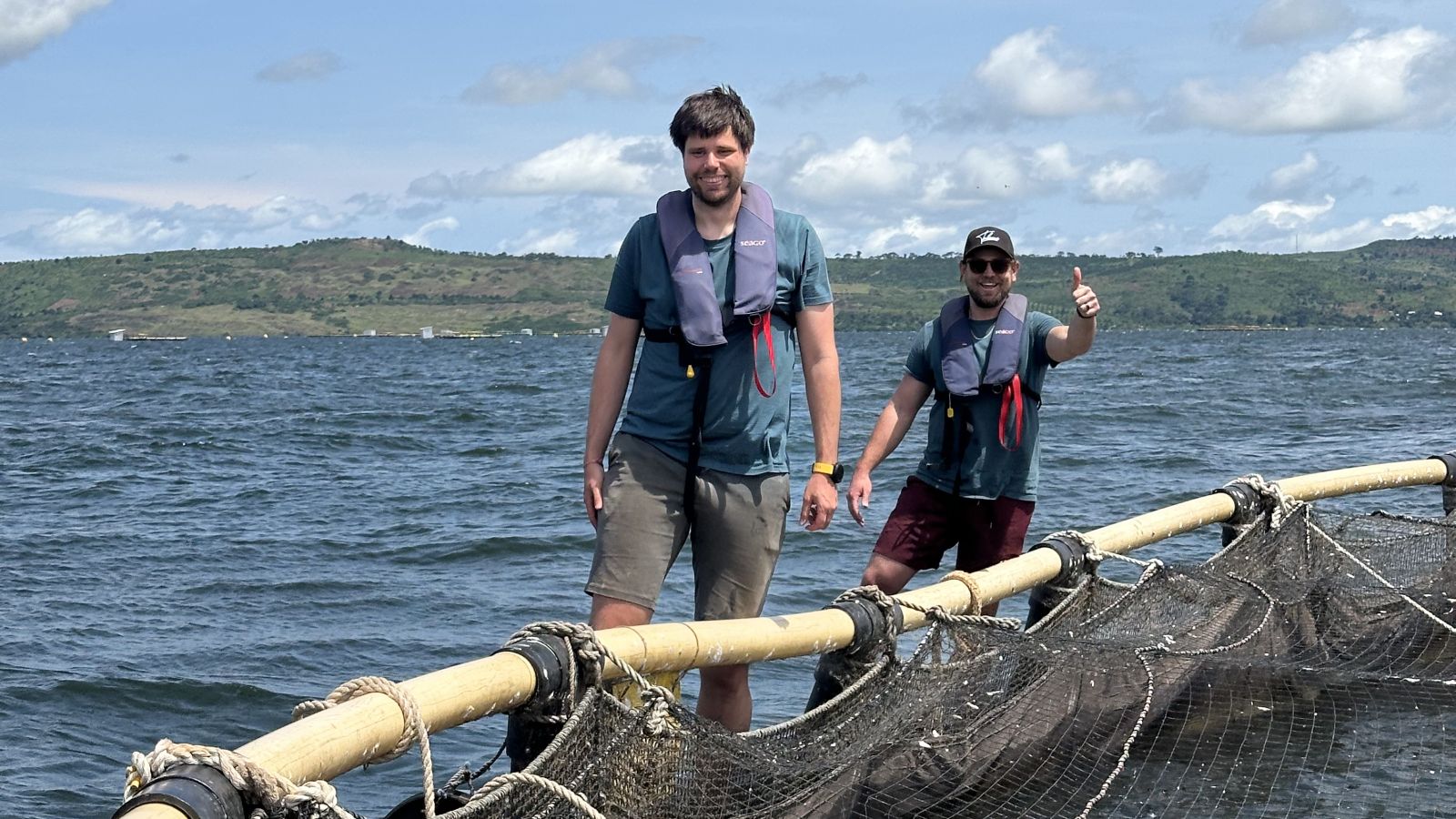
Floris van Rijn on a tilapia farm on Lake Victoria, wearing a TilapAI shirt
Founder

About

Hi, I'm Floris van Rijn.

I'm the founder of TilapAI, and for now I run it as a one-person company, backed by a lot of talented friends along the way.

I've always loved building inventions. I first got into hardware and programming in 2016, trying to build an underwater drone. It never really worked, but it lit a fire that hasn't gone out since.

After a BSc and MSc in finance, I followed that spark into an MSc in Computer Science at the University of Bath in 2022, with a thesis on detecting disease in tilapia using computer vision.
TilapAI is where it all comes together: taking computer vision out of the lab and onto working fish farms, starting with Niloscale.

Get in touch

Proudly supported by

Partners for Water

Niloscale is funded through the Partners for Water programme, a Dutch government initiative run by the Netherlands Enterprise Agency (RVO), backing water-technology ventures that make a global impact.

About the programme
The Netherlands

Get in touch

Run a tilapia farm, or want to back the tech? Let's talk.

Whether you're curious about a pilot, an investor, or a partner in aquaculture, I'd love to hear from you.

Amsterdam, The Netherlands